

Evolution is the most important and informative scientific theory for understanding the nature of humans, life in general, and our planet’s history and future. Considering this level of importance, it is surprising and unfortunate that evolution hasn’t always been introduced in early grade school. My first formal educational experience on the theory of evolution began in high school, when I was introduced to Charles Darwin, basic genetics, and the general idea of natural selection and “survival of the fittest.” However, this experience didn’t immediately translate into an appreciation for just how foundational an understanding of evolution is for learning about who we are, where we came from, and where we are going.
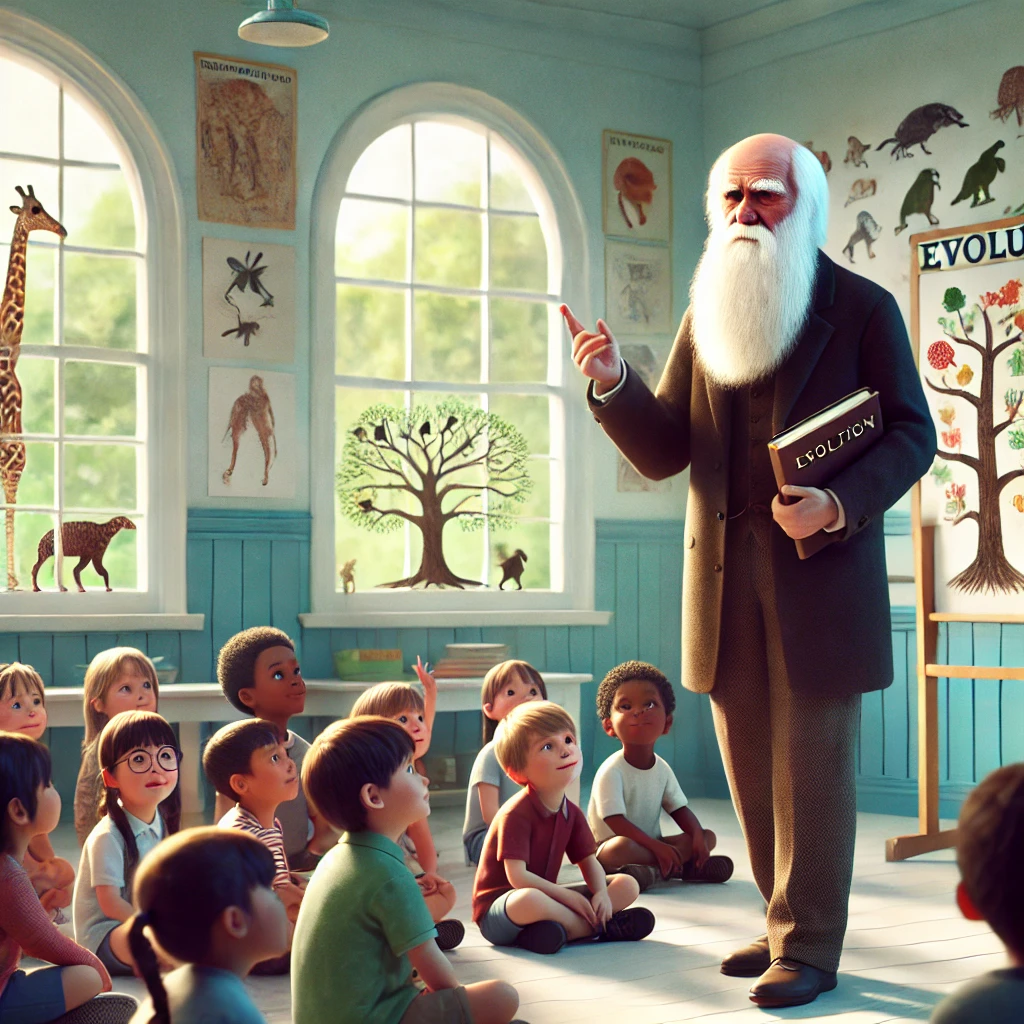
I believe that evolution should be taught in kindergarten when you begin to learn and understand about ourselves and the world around us. It could be introduced at its most basic level, then just repeated every year, going into more detail on every topic, year after year, in stages. Children deserve to receive an education that matches their natural curiosity and the questions they are asking. Children are very capable of asking questions in kindergarten that are directly answered by the theory of evolution. The educational approach of the past was to provide inaccurate answers or no answer at all to these questions. While many schools have now incorporated evolution into their curriculum at the elementary level, many have not. And if evolution isn’t introduced until high school or middle school, many students are no longer as curious about these big philosophical issues, instead distracted by other pursuits and educational demands. Providing an early introduction to a simple, but accurate, understanding of evolution would have so many advantages for child development. It would be the first step toward developing a philosophical framework about the world, grounded in science.
We do have an answer to many of the “big” questions that kids ask. Why are we here? Where did we come from? Why do we look the way we do? Why can we do the things we do? What’s the meaning of life? The most complete and accurate answer to all of these is the same, evolution. That’s why it was so exciting when I finally allowed the facts of evolution to inform my general philosophy of our existence. Most people have some rudimentary understanding of evolution, but to fully embrace the entirety of what evolution can teach us about ourselves and the world we live in takes time to mentally digest. The timeline of evolution is mind-boggling. Our entire existence as a species spans 300,000 years. If humans went extinct today, an intelligent earthling species evolving 10 million years from now may not even add humans to their timeline. We just wouldn’t have been around long enough, the human era would be just a small blip in the long history of evolution.
Evolution teaches us about our ancestry and the long lineage of distant ancestor organisms that evolved into what we see today as humans. The fact that we evolved from bacteria might hit different to a high schooler, but what about a kindergartener? A kid of the latter age would likely embrace evolution with much less skepticism and much more enthusiasm and curiosity. Just imagine the follow-up questions you would get from these kids. How would this curiosity, fed with knowledge, affect their intellectual development? Would it change how we treat other animals? Would it lead to the realization of how much we all have in common, that we are all just one species of the 500 billion species that were here before us? A true appreciation and understanding of evolution, beginning at a young age, should be the foundational context for our educational system. As we live out our lives trying to understand who we are and where we are going, a philosophy grounded in evolution is essential for those seeking truth.
Suggested further reading:
Children’s Encounters with Natural Selection During an Interactive Read Aloud
The Teaching of Evolution (statement from National Science Teaching Association)
 Neurophilosophy Cafe