

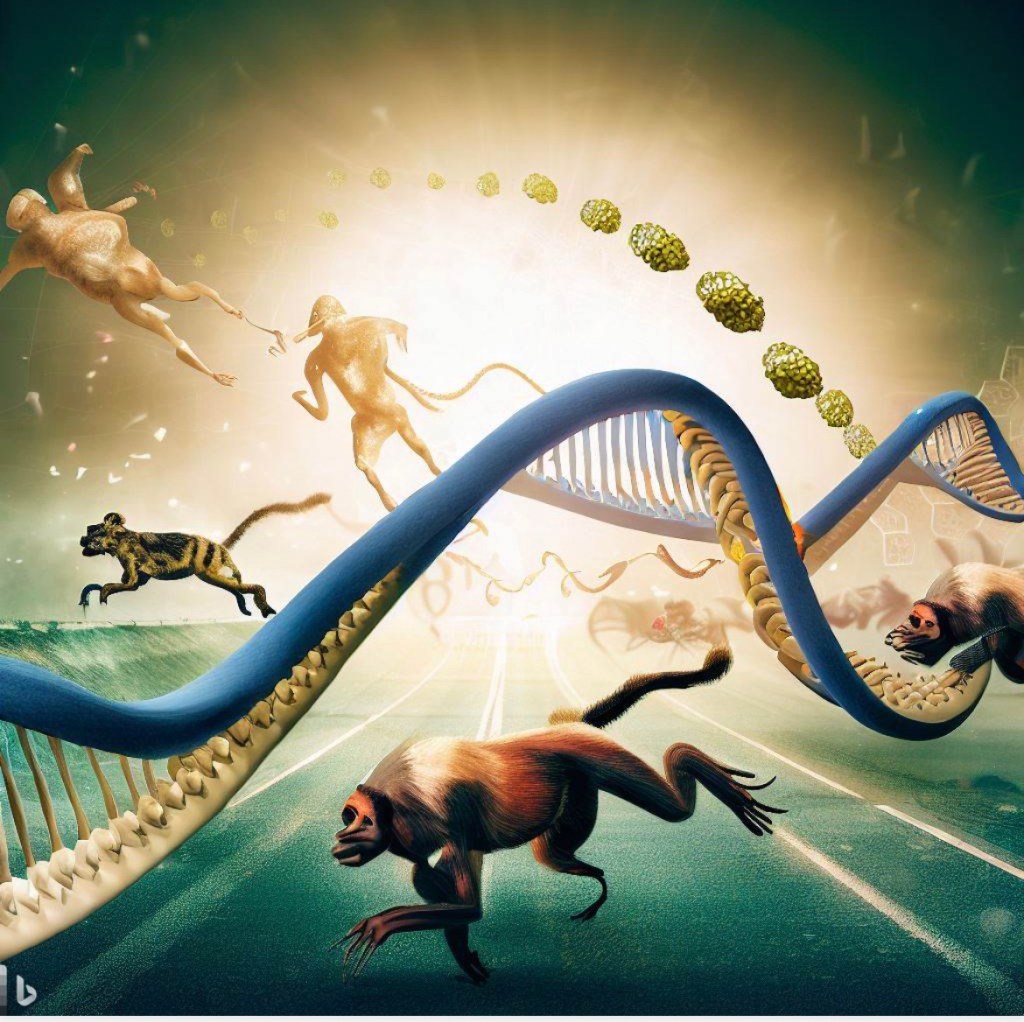
How has the knowledge of epigenetic inheritance changed the theories of Darwinian evolution? It seems to me that our previous beliefs about the nature of environmental influence on the selection of genes/phenotypes in an organism would be significantly altered on every level. This would include the rate that diversity of genes, phenotypes, and species evolved and how “efficient” evolution actually is as a process for adapting organisms to a changing environment. My main question has been trying to wrap my brain around how epigenetic inheritance produces an adaptive outcome for subsequent generations, given it seems to be very sensitive to acute environmental events, such as inherited fear memories shown in animal studies (i.e. Ressler and Bale studies), events that could be very unique and infrequent in nature. What if a rare acute environmental event occurs, which then alters the epigenetic markers of an entire population of a species, yet these markers now inherited by the subsequent population have no effect on its fitness, because that event never occurs again? Or it could result in a lower fitness since it is an unused resource. It just seems that environmental events that can lead to epigenetic inheritance have an equal chance at increasing reproductive fitness as they do at decreasing it. I guess it depends on the rarity of the environmental event. Another way I have thought about it is that it seems to me that genetic inheritance occurs in response to how well the organism was adapted to the environment across its entire lifespan (at least until it reproduces), while epigenetic inheritance responds to environmental events that come and go in a small window of the lifespan. Many of these environmental events could have a very low probability of occurring in the next generation. Imagine a species that was very well adapted to an environment for 1000s of years, but then a single climate event (earthquake) alters their epigenetic markers and it then causes the demise of the entire species the following generation. And this is because it made the entire species more anxious to the point where they all have heart attacks while unsuccessfully trying to mate. One last thing, I think genetic inheritance adapts to the environment too slow and epigenetic inheritance adapts too fast. If so, are they just two inefficient evolutionary processes that together make it a bit more efficient? Am I not thinking enough from the perspective of the selfish gene? What’s the deal?
Returned to these thoughts today (2023) and found this quote from a 2017 review article that seems to support my thoughts above.
“Epigenetics can act as a time-keeping mechanism by silencing genes that have outlived their purpose. However it is worth noting that this function of epigenetic marks has limits, as in many cases the gene in question is not entirely silenced (Badyaev, 2014), but instead is expressed at a lower rate. From a Darwinian perspective this is an undesirable consequence as the individual will survive but their offspring will instead now possess a trait that reduces their adaptability. In this way many traits that lower the overall fitness of the species may accumulate.” (source below)
Bioscience Horizons: The International Journal of Student Research, Volume 10, 2017, hzx007, https://doi.org/10.1093/biohorizons/hzx007
 Neurophilosophy Cafe